
🤖 AI Summary: 60-Second Read Artisanal soap making is the highest-margin entry point into the Indian beauty market in 2026. By focusing on “Cold Process” techniques rather than “Melt and Pour,” you can create premium, customized bars that command 400% markups. Success requires a dedicated “Clean Zone,” surgical-grade precision gear, and navigating the 2026 IT and cosmetic laws.
- Soap is the new Gold: While everyone is making serums, the “Solid Beauty” niche is actually where the cash is hiding.
- Chemistry isn’t Optional: If you don’t measure your lye to the 0.01g, you’re not making soap; you’re making a lawsuit in a box.
- Legal Slaying: We break down the boring CDSCO paperwork so your business doesn’t get “cancelled” before your first restock.
What is a Home Soap Business?
A soap making business at home in India involves the formulation, manufacturing, and marketing of artisanal cleansing bars using natural fats, lye, and botanicals within a regulated residential setup. To succeed in how to start a soap making business at home in India, you must move past the “hobbyist” mindset. In 2026, Indian consumers are ditching mass-produced “detergent bars” for pH-balanced, nutrient-dense soaps like Goat Milk & Manjistha or Charcoal & Tea Tree.
Phase 1: Selecting Your Profitable Niche
Don’t be a generalist. To rank and sell, you need a “Micro-Niche.”
- Ayurvedic Specialty: Focus on traditional Indian herbs (Neem, Tulsi, Turmeric).
- The “Solid” Revolution: Shampoo bars and conditioner bars are trending due to the “Zero-Plastic” movement.
- The Wedding Favor Market: Custom-scented, aesthetic bars for bulk gifting.
Precision is the baseline of any cosmetic business. While this guide focuses on soap, many of these tools overlap with general cosmetic labs. If you plan to expand into lotions or face creams, see our master guide on skincare formulation tools for home business for a detailed comparison.
The 11 Secrets to Start a Soap Making Business at Home in India (2026 Edition)
If you are researching how to start a soap making business at home in India, you will find a lot of outdated advice. To survive the highly competitive 2026 beauty market, you need to implement these 11 professional secrets from day one.
1. The “Superfat” Margin Multiplier Commercial soaps strip the skin because they use exact lye-to-oil ratios. Artisanal makers use a secret called “Superfatting”—adding 5% to 8% extra oils (like Shea or Mango Butter) that the lye doesn’t consume. This leaves the bar ultra-moisturizing, allowing you to charge ₹250+ for a product that costs ₹30 to make.
2. Never Trust a Kitchen Scale (The Chemistry Rule) Lye (Sodium Hydroxide) is an unforgiving chemical. If your scale is off by even 2 grams, your soap could literally burn a customer’s skin. You must run every single recipe through an industry-standard <a href=”http://www.soapcalc.net/.
3. Master the “Gel Phase” for Aesthetic Colors To get those deep, vibrant colors that pop on Instagram, you need to force your soap into “Gel Phase” by keeping it warm after pouring it into the mold. Wrap your silicone molds in a heavy towel for 24 hours to lock in the heat and make your micas shine.
4. The “Water Discount” Hack for Faster Cash Flow Traditional cold process soap takes 4 to 6 weeks to cure (evaporate water). By strategically reducing the water in your recipe (a “water discount”), your bars harden faster, allowing you to cut curing time to 3 weeks and restock your inventory twice as fast.+1
5. Anchor Your Scents with Clay A massive complaint about handmade soap is that the scent fades. Pure essential oils are volatile and evaporate. The secret is to mix your essential oils with a tablespoon of Kaolin Clay before adding them to the batter. The clay “anchors” the scent, making it last for months on the shelf.
6. Stop Buying Base Oils on Amazon Retail Buying 500ml of olive oil on Amazon will eat your profit margins alive. For your base oils, you must find wholesale soap making raw material suppliers India (like VedaOils or local IndiaMart distributors) and buy in 5kg to 15kg drums.
7. The “Clean Zone” Mandate You cannot mix lye next to where you chop onions. The legal requirements for selling soap from home India dictate that you must have a dedicated, sterile workspace. Use an air purifier to keep dust out of your curing racks.
8. The “Ugly Soap” (Confetti) Strategy Zero waste equals pure profit. When you trim the rough edges off your soap logs, don’t throw the scraps away. Chop them up and mix them into your next batch to create a beautiful, multi-colored “Confetti Soap.” It’s one of the most profitable soap niches 2026 because it appeals to eco-conscious Gen Z buyers.
9. The Form 32 Cosmetic Reality Check While many start by selling to friends and family, scaling online legally requires strict adherence to the CDSCO Cosmetic Regulations (Form 32) . Don’t panic—start by registering your business on the official MSME Udyam Registration portal to legitimize your banking, and work with a third-party consultant to handle the CDSCO paperwork when you hit ₹50,000 in monthly revenue.
10. Dehumidifiers are Non-Negotiable in India The Indian monsoon is the enemy of cold process soap. High humidity causes “Glycerin Dew” (sweating), making your bars sticky and ruining your eco-friendly paper packaging. A small room dehumidifier is mandatory for your curing racks.+1
11. Document the Danger (Content Marketing) People love watching the dangerous, scientific process of lye mixing almost as much as the satisfying soap cutting. Set up your solo content creator studio zero effort setup 2026 and film your batches. “Watch me make a 5kg batch of turmeric soap” is a guaranteed viral reel format.
Phase 2: The Legal “Hard Truths” in 2026
Before you melt a single gram of oil, you must understand the legal requirements for selling soap from home India.
- MSME Registration (Udyam): Absolutely essential for business bank accounts.
- Cosmetic License (Form 32): In 2026, the CDSCO has tightened rules. While small-scale creators often start “under the radar,” scaling requires a dedicated non-kitchen area that follows India IT Rules 2026 and business impact laws.
- GST Identification: Mandatory if you plan to sell on Amazon.in or Flipkart.
Comparison: Which Method Should You Choose?
| Feature | Melt & Pour (Beginner) | Cold Process (Professional) |
| Difficulty | Very Low | High (Chemistry required) |
| Profit Margin | 40-50% | 70-85% |
| Ingredient Control | Limited | Total (Customize oils/fats) |
| Curing Time | Instant | 4-6 Weeks |
| Keyword Target | Easy Entry | Profitable soap niches 2026 |
Phase 4: Soap making raw material suppliers India
Don’t buy oils from the grocery store. You need cosmetic-grade fats.
- Base Oils: Coconut Oil (for lather), Olive Oil (for conditioning), and Palm Oil (sustainable RSPO) for hardness. If you use Palm Oil, ensure it is certified by the Roundtable on Sustainable Palm Oil (RSPO) to appeal to eco-conscious Gen Z buyers.
- Essential Oils: Invest in therapeutic grade. Low-quality oils will “flash off” and leave your soap scentless.
- The Mithvibe Secret: Use a solo content creator studio setup to show your audience the “Raw to Refined” journey. This builds 10x more trust than a static ad.
The 2026 Soap Business Starter Kit
To build a professional brand, these are the non-negotiable items to add to your lab immediately:
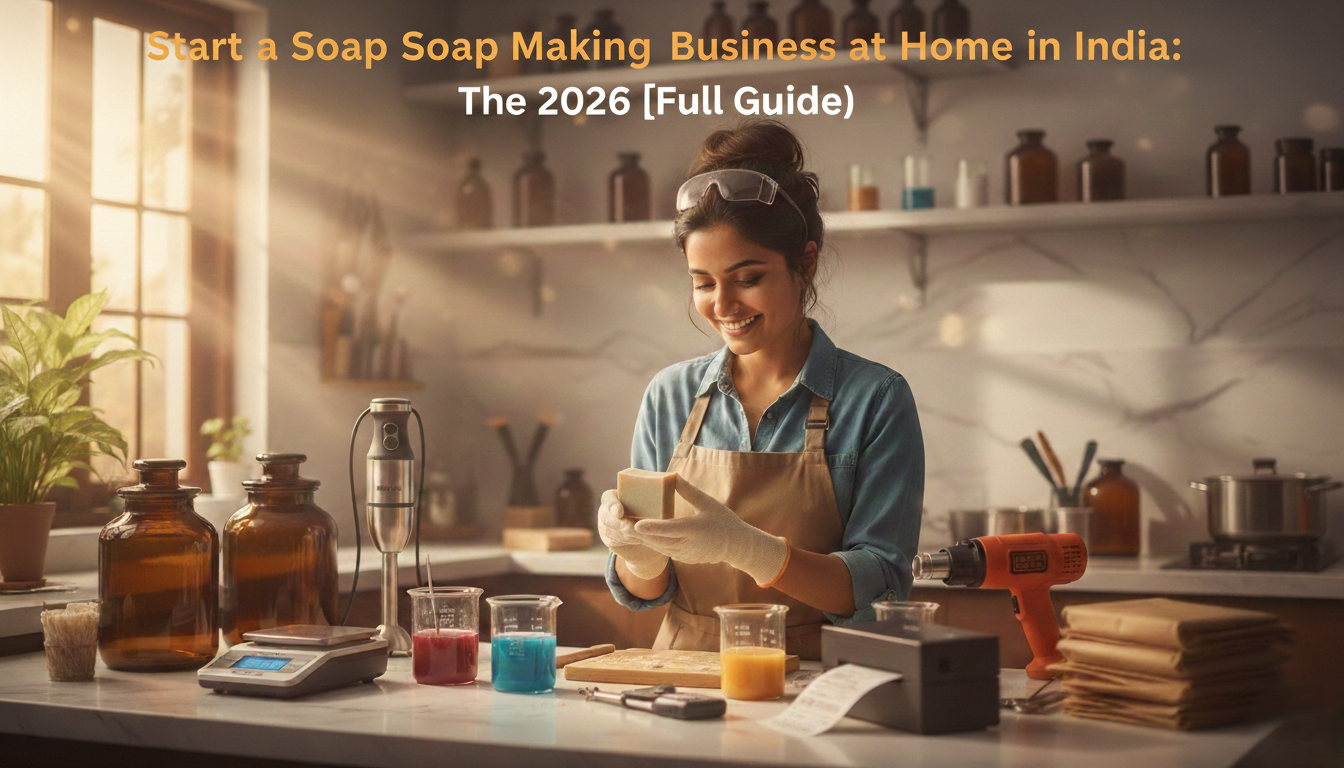
- The Precision Anchor: HealthSense Chef-Mate Digital Kitchen Scale – You need 0.01g accuracy for lye and essential oils.
- The Thermal Guard: Dr. Trust Infrared Forehead & Object Thermometer – Crucial for checking oil and lye temperatures without contact.
- The Emulsifier: Inalsa Immersion Hand Blender – Look for stainless steel shafts only; plastic will degrade with lye.
- The Safety Kit: Nitrile Powder Free Gloves & Safety Goggles – Lye (caustic soda) is dangerous; never formulate without these.
- The Storage King: Borosil Glass Beakers (Set of 3) – Heat-resistant and won’t react with the chemicals during the “trace” phase.
- The Labeler: Phomemo M110 Label Maker – Perfect for batch numbers and ingredient lists on artisanal packaging.
🚀 Up Next: Having the right tools is only half the battle. Stay tuned for our next deep dive: “The 2026 Masterlist of Soap Ingredients: From Luxury Butters to Pure Lye.”
Conclusion: From Hobbyist to CEO
Starting a soap business in India isn’t just about melting fats and mixing scents; it’s about precision, safety, and storytelling. In 2026, the Indian “Clean Beauty” market is moving away from mass-produced chemicals toward artisanal, transparently made products. By investing in the “Big 6” Starter Kit we discussed, you aren’t just buying tools—you’re building a professional laboratory that ensures your first batch is as safe and high-quality as your thousandth.
Don’t let “analysis paralysis” stop you. The most successful soap brands in India started on a single kitchen counter with a dream and a digital scale.
Your 24-Hour Challenge: Order yourSafety KitandPrecision Scaletoday. Once they arrive, you’ve officially transitioned from “thinking about it” to “doing it.”
🧪 Ready for Phase 2?
Tools are only as good as the chemistry you put in them. We are currently finalizing our 2026 Raw Ingredients Sourcing Guide, covering everything from luxury Shea butters to pure Lye pellets. [Click here to Bookmark the Ingredients Article (Coming Soon)] so you don’t miss the profit-margin secrets!
Do I need a license to sell handmade soap from home in India?
To sell legally, you initially need an MSME Udyam Registration (which is free and online). However, as you scale, you will require a Cosmetic License from the CDSCO (Central Drugs Standard Control Organization) and a GST number if you plan to sell on Amazon or Flipkart.
How much does it cost to start a small soap business in India?
A professional home-based setup typically costs between ₹10,000 to ₹15,000. This covers your “Big 6” equipment (approx. ₹6,000) and your initial batch of high-quality oils, lye, and molds (approx. ₹4,000).
Which is more profitable: Cold Process or Melt and Pour?
Cold Process soap making is significantly more profitable in the long run. While it requires a 4-6 week curing time, it allows you to formulate from scratch using bulk oils, which lowers your cost per bar by nearly 40% compared to pre-made Melt and Pour bases.
Can I use a regular kitchen blender for soap making?
No. Once a blender or any utensil touches Sodium Hydroxide (Lye), it is no longer food-safe. You must have a dedicated stainless steel immersion blender used strictly for soap making to avoid cross-contamination.
Where can I sell my handmade soaps online in 2026?
The most profitable channels right now are Instagram Shopping, Amazon Karigar, and your own Shopify store. For physical sales, look for local “Organic Famers Markets” or premium gifting exhibitions in Tier-1 cities like Mumbai, Delhi, and Bangalore.